

Understanding a woman’s pregnancy history could help protect her heart for decades to come. For Postdoctoral Research Fellow Kaylee Slater, this is an important part of improving women’s cardiovascular health.
Dr Kaylee Slater was recently recognised through the NSW Cardiovascular Research Network (CVRN) Spotlight initiative, supported by the National Heart Foundation of Australia.
At Her Heart, we’re proud to celebrate the achievements of early and mid-career researchers (EMCRs) who advance our understanding of women’s cardiovascular health and help translate research into better health outcomes.
Based at the University of Sydney’s Faculty of Health and Medicine, Kaylee’s research focuses on improving the detection and management of cardiovascular risk in women following hypertensive disorders of pregnancy. These include preeclampsia and gestational hypertension.
Her interest in research began during her clinical training as a dietitian. Working directly with patients revealed an important gap between health evidence and the support people actually receive.
She saw that many patients were not getting the information they needed to manage their health. This sparked an interest in understanding how research could translate into meaningful improvements in care.
“
I became interested in understanding not only what the evidence says, but how we can ensure that evidence actually reaches patients in meaningful ways.
”
Today, that motivation continues to shape her work. Kaylee collaborates with women, healthcare professionals and health services to address real-world challenges.
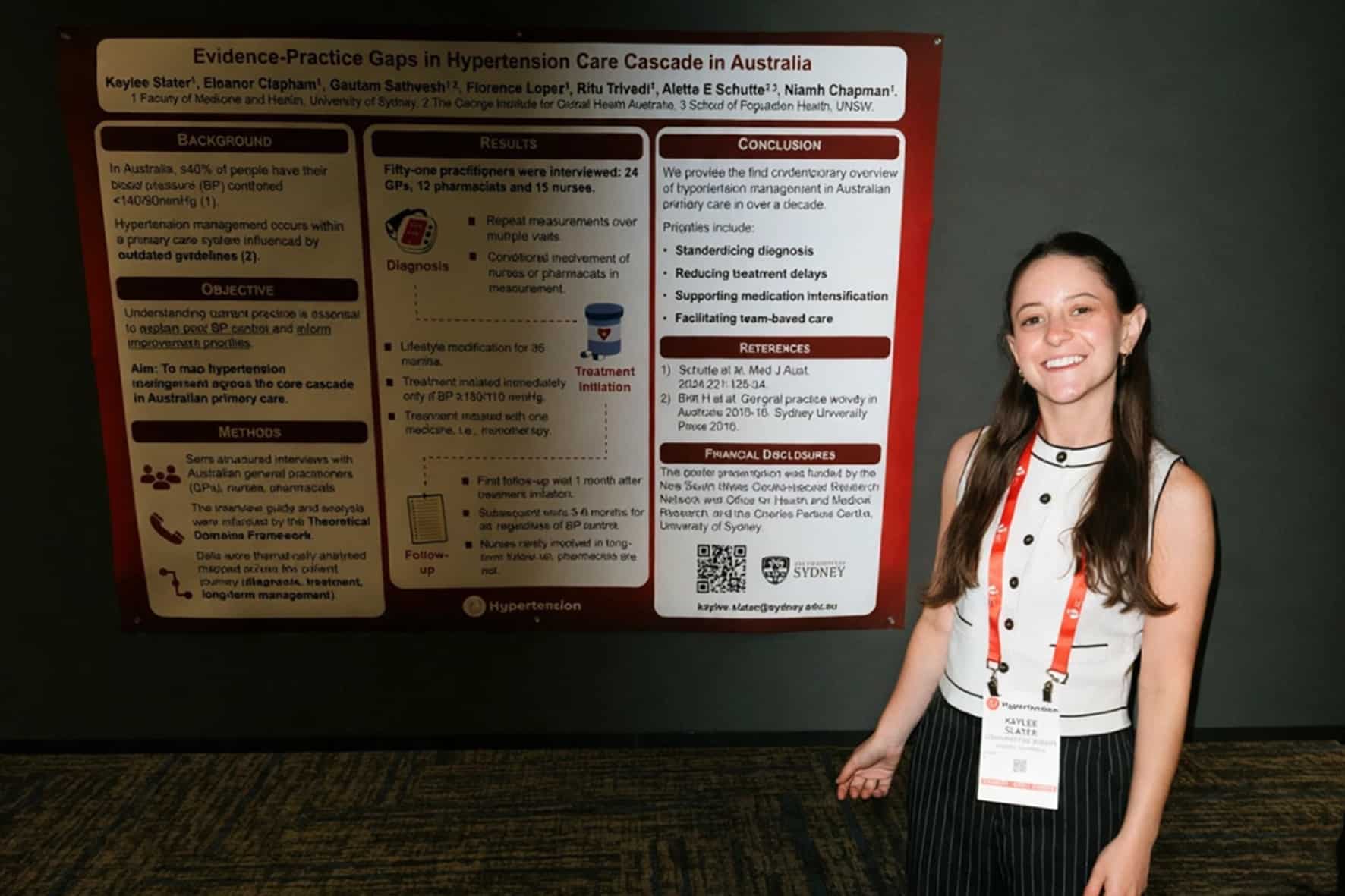
A missed opportunity for prevention
One of the key areas of Kaylee’s research is the relationship between pregnancy complications and future cardiovascular disease.
Hypertensive disorders of pregnancy are recognised risk factors for cardiovascular disease later in life. However, many women are never informed about this connection or the steps they can take to protect their heart health.
Through her research, Kaylee is working to develop and evaluate education and implementation strategies. These aim to support earlier prevention and better follow-up within primary care.
She believes pregnancy offers an important opportunity to identify cardiovascular risk much earlier.
“
I would like to see pregnancy recognised as a critical window into a woman’s future cardiovascular health.
”
Pregnancy provides valuable information about a woman’s long-term health. Yet this information is not consistently incorporated into routine cardiovascular prevention.
Too often, pregnancy-related risk factors are treated as isolated obstetric issues. Their significance for future cardiovascular health can be overlooked.
Recognising pregnancy history within routine healthcare could help change this. It creates opportunities for earlier identification, timely education and proactive care.
Listening to women’s experiences changes research
For Kaylee, some of the most influential lessons have come directly from women with lived experience.
Working alongside women who have experienced hypertensive disorders of pregnancy has challenged assumptions about how health information reaches patients.
Many women shared that nobody had told them about the connection between their pregnancy complications and future cardiovascular disease.
These conversations highlighted a significant gap between research evidence and everyday healthcare experiences.
“
As researchers and healthcare professionals, we often assume that if evidence exists, it is reaching the people who need it.
”
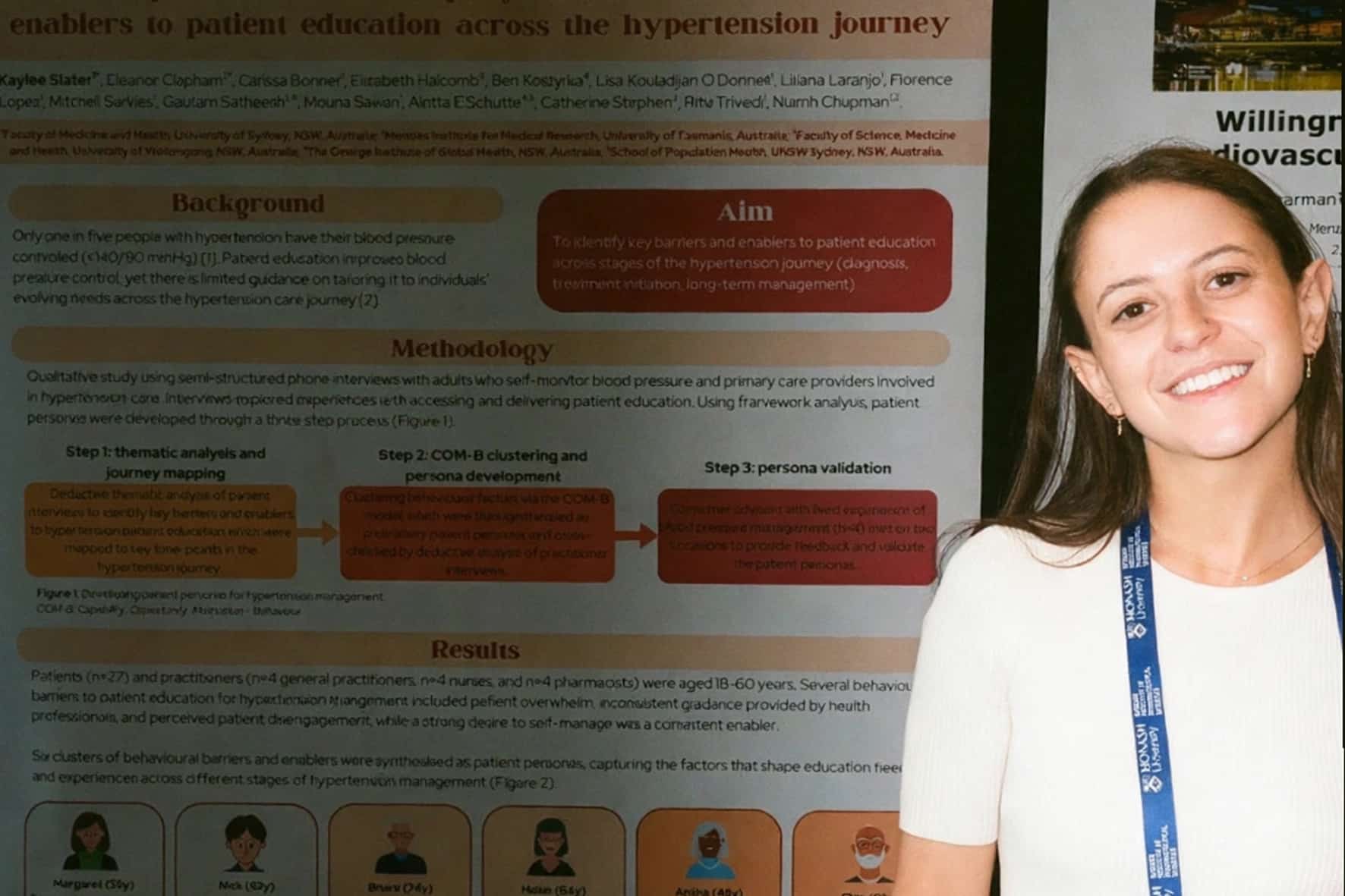
This experience reinforced the importance of involving women throughout the research process. It also highlighted the need for solutions that are practical, meaningful and accessible.
Kaylee believes research is stronger when consumers help shape its direction. Their experiences can reveal gaps that might otherwise remain overlooked.
A more promising future for women’s heart health
Looking ahead, Kaylee is encouraged by the growing recognition of women’s cardiovascular health.
Increasing investment in research, stronger consumer advocacy and greater attention to historical gaps are all reasons for optimism.
She is particularly encouraged by the shift towards genuine partnerships with consumers. When women help shape research priorities and solutions, the potential for meaningful change increases.
For the next generation of researchers, her advice is simple.
“
“Stay curious, stay connected to the people your research is intended to benefit and not be afraid to work across disciplines.”
”