
What is Takotsubo Cardiomyopathy?
Also known as “Broken-Heart Syndrome”, Takotsubo Cardiomyopathy (TCM) is a condition where your heart muscle becomes temporarily weakened or stunned.
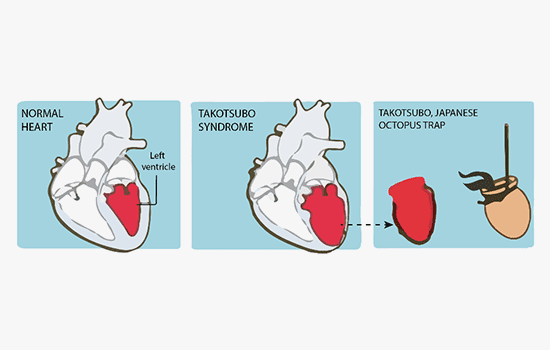
It is often known as Broken Heart Syndrome due to it occurring after a period of intense emotional and physical stress and the cardiomyopathy (as well potential heart failure) aspect of the name is that your heart’s left ventricle (the main pumping chamber) is impacted, causing blood not to pump properly in your heart.
The condition is named after the Takotsubo pots which the Japanese have used to trap octopi.
When this condition was first identified in Japan in the 1990s, the change of shape of the left ventricle (your heart’s main pumping chamber) was compared to these pots.
Whilst this condition is considered temporary in terms of the changes to your heart, new research is suggesting that there will be longer term heart-failure side effects for sufferers, which will be discussed below under what are the long-term implications.
Statistics
Due to TCM being a relatively new condition, statistics for Australian women are still in the making. The condition is thought to mostly affect older women; however, men too can be affected at any age range.
Research suggests that older women are more likely to develop TCM after menopause due to the loss of oestrogen, as oestrogen can play an important role in protecting your heart.
In the United states as well as the continent of Europe, there are estimates that between 50,000-100,000 cases per year of TCM, with one Swedish study suggesting that each case in the country had a burden of around €10,000 ($16,000) per person to the healthcare system.
Causes
The causes of TCM can be suggested to be both emotional and physical triggers. Here is a list of some of the suggested triggers for TCM:
Sudden Emotional Stress
- Death of someone close to you such as your partner, family member or a pet
- Loss of job, money or income
- Mental illness such as depression, post-traumatic stress disorder, associated feelings when someone you care for is ill
- Life changes such as a new job or moving to a new city or location
Physical
- Giving birth
- Cancer Treatment
- Exacerbation of chronic illness
- Flu
- Infection
- Migraines
- Seizures

Signs & symptoms of Takotsubo Cardiomyopathy
The acute signs and symptoms of TCM mimic those of a Heart Attack, which are:
- Acute chest pain
- Shortness of Breath
- Fainting, dizziness, feeling light-headed
The less acute signs and symptoms associated with TCM are:
- Nausea
- Feeling unwell
- Physical and mental weakness, lack of energy
We recommend that if you experience these symptoms you call an ambulance. In Australia this number is 000.

Treating Takotsubo Cardiomyopathy
There are some different treatments that your doctor may consider. Here are some of the possible treatment options for you and your TCM:
Investigations:
When you initially present to hospital with TCM, there are a number of investigations that your doctor may consider to not only check your heart pumping functions but to ensure you also do not have coronary artery disease.
These investigations typically include: angiogram (checking the coronary arteries for narrowing’s), ECG (checking the electrics of the heart), ECHO (ultrasound of the heart and its pumping function) and blood testing (looking at heart enzymes).
Medications:
Medications are often the most typical treatment that your doctor may prescribe to help you manage and recover from TCM. Some medications may include ACE inhibitors, blood thinners (e.g. Aspirin) and cholesterol lowering medications (statins) if you have underlying coronary artery disease. NPS Medicinewise is a fantastic consumer-friendly resource to learn more about your medications.
Managing physical and emotional stress:
It is recommended that you work on managing any physical and emotional stress which led to your TCM; this can be done in conjunction with your doctors, as well as completing a cardiac rehabilitation program.
What you need to know
Experts Q&As
Useful Links
- Takotsubo Cardiomyopathy Blog Posts
- Recognising broken heart syndrome
- ‘Broken heart syndrome’ not temporary
- Yes, you can die of a broken heart. Here’s how
- Broken heart syndrome was thought to be a short-term condition – the latest evidence suggests otherwise
- Takotsubo Support Facebook Group
- St Vincent’s Heart Health – Takotsubo Cardiomyopathy