
Cardiomyopathy
Cardiomyopathy is a condition where your heart muscle becomes thickened, stretched or weakened.
When the heart muscle changes like this, it can have trouble pumping blood around your body.
One of the possible long -term outcomes for women with cardiomyopathy is heart failure.
Different types of Cardiomyopathy
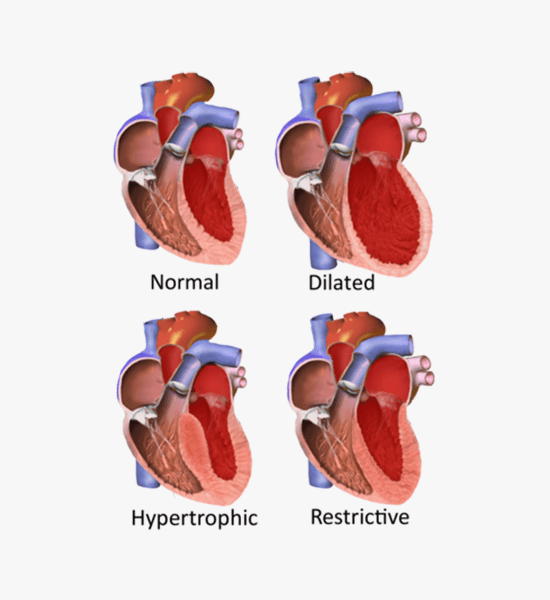
Restrictive:
A condition where your ventricles do not thicken, yet they still become stiff and rigid and cannot pump blood effectively.
Dilated:
Occurs when your main pumping chamber, the left ventricle, becomes enlarged and weakened so it cannot pump blood effectively.
Hypertrophic (HOCM):
Where the ventricles (bottom pumping chambers on your heart) become thickened and stiff, narrowing the chambers. When the chambers are narrow, they cannot pump blood effectively around the body.
Arrhythmogenic right ventricular cardiomyopathy (ARVC):
The right ventricle of your heart has the muscle replaced with a different type of tissue that is more fibrous and fattier. This is problematic as it can lead to dangerous arrhythmias (abnormal heart rhythms).
Please click the links for information on Takotsubo cardiomyopathy and peripartum cardiomyopathy.
Causes
There are several potential different causes for cardiomyopathy:
- Pregnancy
- Illicit substances such as amphetamines
- Genetics, as some types of cardiomyopathies may be genetically inherited
- Other health conditions such as cardiac sarcoidosis (lumps of cells and inflammation in the heart) and haemochromatosis (too much iron in the heart)
- Over-consumption of alcohol
- Infections
- Prolonged hypertension (high blood pressure)
- Prolonged fast heart rate
- Heart attacks as damage to the heart muscle can occur
Statistics
It is estimated that around 1 in 500 Australians have Cardiomyopathy, however numbers are considered not representative as early-stages of Cardiomyopathy may not present with any symptoms at all.

Cardiomyopathy and heart failure are the second-leading heart disease for hospital admissions in Australia.
Women in Australia have less hospitalisations than men for Cardiomyopathy and heart failure.

Signs & symptoms of Cardiomyopathy
It does depend on which stage of cardiomyopathy you have, as early stages of cardiomyopathy can sometimes present without symptoms.
If you have progressing cardiomyopathy these are some of the symptoms you may experience:
- Fatigue
- Shortness of breath
- Swelling in the feet and lower legs, also known as oedema
- Dizziness
- Palpitations
- Chest pain
- Abdominal bloating and swelling

Treating Cardiomyopathy
There are many different treatment options available for Cardiomyopathy, it depends on your severity of cardiomyopathy. It would be best to discuss these treatment options with your doctor.
Medication Treatment For Cardiomyopathy
There are different medications which may be required for treating cardiomyopathy to help manage your symptoms and maintain your heart function. NPS Medicinewise could be a good place to find out more information about them, as well as speaking to your doctors or pharmacist.
Lifestyle Modifications For Cardiomyopathy
There are different lifestyle modifications you can do to manage your cardiomyopathy:
- Eat a healthy heart-friendly diet
- Avoid alcohol
- Don’t smoke
- Exercise regularly
Procedures For Cardiomyopathy
You may need surgery on your heart if you have Cardiomyopathy.
Defibrillator Insertion
You may need to have a defibrillator inserted if your heart has the chance of going into an abnormal rhythm. If your heart has a dangerous rhythm, it will shock your heart to rest the rhythm.
Pacemaker
A pacemaker regulates your heart rhythm if it is in a rate that may be either too slow, fast or irregular.
Ablation
You may require an ablation to thin out the level of tissues on your ventricle that is reducing blood flow.
Heart transplant
You may need a heart transplant if your heart does not respond to treatment.